Buying a tray sealing machine is mostly about matching the machine to your container, not the other way round. A cloud kitchen packing biryani, a tea stall sealing cups and a caterer packing thali meals all need different machines. This guide walks through the choices in the order that makes them easiest.
Start with your container, not the machine
Look at what you pack today. Three things decide which machine fits:
- Shape: a round bowl, a cup, a single-compartment tray or a tray with several compartments.
- Size: the outer size of the rim, since the film has to seal all the way around it. Measure length and width for trays, or diameter for cups and bowls.
- Material: plastic (PP, PET, PS), foil or coated paper. The film you use has to suit the material, so note it down.
Every machine works with a mould made for your container, so a sample tray or a clear photo with measurements is the fastest way to get the right match.
Match the machine type to what you pack
- Tea, juice, lassi, curd or dessert cups: the Cup and Glass Sealer.
- Soup, biryani, curry, ice cream or sweets in round bowls: the Round Container Sealer.
- Rice, noodles, salads, cut fruit or bakery in a single tray: the Rectangular Tray Sealer.
- Tiffin and lunch box trays (dal and rice, curry and bread): the 2 Portion Tray Sealer.
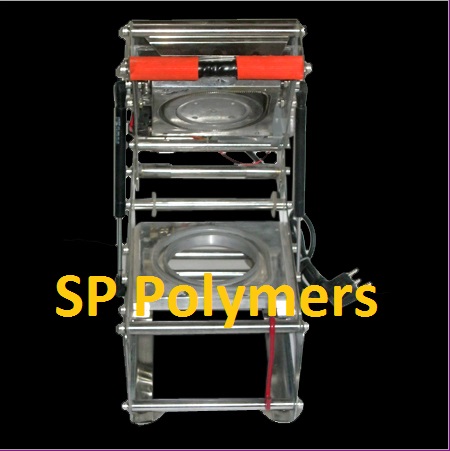
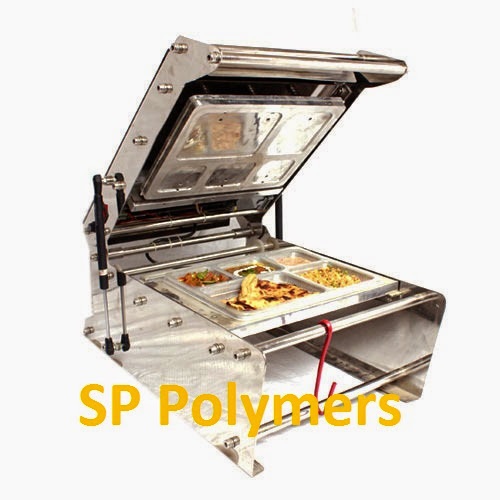
- Thali meals with rice, dal, sabzi, roti and sweet: the 5 Portion Meal Tray Sealer.
- Large meal trays for hospitals, factories and big catering orders: the 8 Portion Meal Tray Sealer.
If you pack more than one kind of container, you may need more than one machine, or a different mould for each. Tell us everything you pack and we will suggest the simplest setup.
Work out how many packs you need per hour
Our models seal roughly 120 to 400 packs per hour depending on the machine: cup sealing is the fastest, and the big 8-compartment trays are the slowest because they are larger. Think about your busiest hour, not your daily average. If you pack 150 meals in a two-hour lunch rush, that is about 75 an hour, which any of our models can handle, so the filling and bagging steps will set your pace, not the sealer.
Keep some headroom for growth. A machine that is only just fast enough on day one will slow you down in a few months.
Check power and space
The machines run on a single-phase power supply, and the rating goes from 350 W for the cup sealer up to 1200 W for the 8 Portion Meal Tray Sealer. They are table-top machines with a stainless steel body, so you need a steady table near a proper power socket and enough room to open the arm and place a tray. Keep the machine away from water splashes and wipe it clean after each shift.
Do not forget the sealing film
The film and the container must be able to seal to each other. A film that does not suit your tray will peel, leak or wrinkle, however good the machine is. Read our guide to choosing sealing film for trays and cups, and test a small quantity with your own food before you order in bulk.
Questions to ask any supplier before you buy
- Will you make the mould for my exact tray or cup?
- What is the real output per hour for my container size?
- What power supply and wattage does the machine need?
- Is installation and staff training included?
- Can you advise which film works with my container?
- Who do I call if the machine has a problem?
What to send us to get a quote
To get a correct price quickly, send us:
- A photo of your tray, cup or container, with its length, width and depth (or diameter).
- The kind of food or drink you pack.
- How many packs you seal on a busy day.
- Your city, so we can plan delivery and setup.
You can send these on WhatsApp at +91 85108 13358 or through the enquiry form. We reply within one working day.